top of page

Maybe the heart of The American Dream is private ownership. You want to be able to own your own home and maybe your own business. You want to pass something down to your kids or grand kids. It is basic in America. A new survey says family businesses account for 84 million jobs and 74% of family businesses stay in operation for more than 30 years, but only 10% make it over 100 years of operation.


Martin & Company is an American Dream that many of us have held in our hands. The founding C.F. Martin established the company in 1833 in Nazareth, Pennsylvania. C.F. ‘Chris’ Martin currently sits on the board as Executive Chairman and is the great-great-great grandson of the founder. It is the oldest guitar company in America. The list of accomplishments are too numerous to list in this post, but Martin just passed the milestone of making 3 million guitars.


They are very collectible, but also very playable. You can tell by the list of famous Martin players.

Willie Nelson plays a Martin N-20 named “Trigger”

Dolly Parton usually has a Martin on stage

Johnny Cash had a D-35

Bob Dylan’s first guitar was 1949 Martin

Eric Clapton has several signature Martins

Neil You preferred the D-28 Martin

Hank Williams also preferred his Martin D-28

Kurt Cobain played a Martin D-18E on MTV UnpluggedPaul Simon had many Martins on stage

Avett Brother have a signature Martin

John Mayer has a signature model

The list is both stellar and endless.


Here’s an episode from Every Guitar Has A Story. This Martin sold immediately after the cameras were turned off.


1955 Martin D-28
1955 Martin D-28


Do you own a Martin?


Let’s open this can of worms and find the real answer.


First, let’s mention the benefits that are not financial. When you play a guitar, you are getting a type of value that can never be had with a stock certificate or a lump of gold.

When you hang a guitar on the wall of your “music room,” it has an element of an art investment. When it is a “family” instrument, it has the value of something that links you to a past relative much like your grandparents' silver serving set. All of those things are valuable, but let’s set them aside for the pure financial investment.


Obviously, the short answer is that a guitar is worth what someone will pay for it when you are ready to sell. The more you know about the instrument and the market, the better you will do with the financial investment.


When you buy a well made, new guitar, it may take a lifetime to really see a great return on that money. You should give those high quality guitars to your grand kids. They will cash in on your investment.


New guitar sales are around $11billion a year.


That is no where near the end of the conversation. Guitars are real world commodities. Savvy traders know what they are buying. On the low end, some traders actively look for cheap guitars that are easily sold for a good profit. In that process, they often find hidden treasures that translate into meaningful money. Knowledge is the key to success.


Take a look at the high end. Brand is important. Just looking at numbers, Fender, Gibson and Martin fill the top 10 most expensive guitars sold at auction. That may simply be a function of the preference of music stars. The Jimi Hendrix Woodstock Fender Strat sold for $1.3million. Peter Green/Gary Moore Les Paul sold for $2million. There are a dozen or so famous guitars that are worth more than $1million. They were all great guitars, but the player made the difference. By the way, the current record is Kurt Cobain’s Martin D-18E that sold for $6million.


On a similar note, an autographed guitar that was not played by the signer is usually only worth what that autograph is worth.


Are guitars a financially good side hustle for you? You better have a strategy.


1. Be opportunistic. A good investment may pop up at any time. Be ready at your level.


2. Players like quality, long haul investment guitars. A good used guitar that you love to play will probably give you a great financial return. You will keep it playable and sellable.


3. Dealing easily under-priced guitars that you can flip in a hurry is a great strategy. Beware of unseen damage, stolen guitars, fake brand guitars,  Get a trusted group of people you can double check your thoughts about repairs and value.


Are you attracted to this lucrative side hustle?

Do you have instruments you would like to sell?

Would you like to talk to other like minded people?


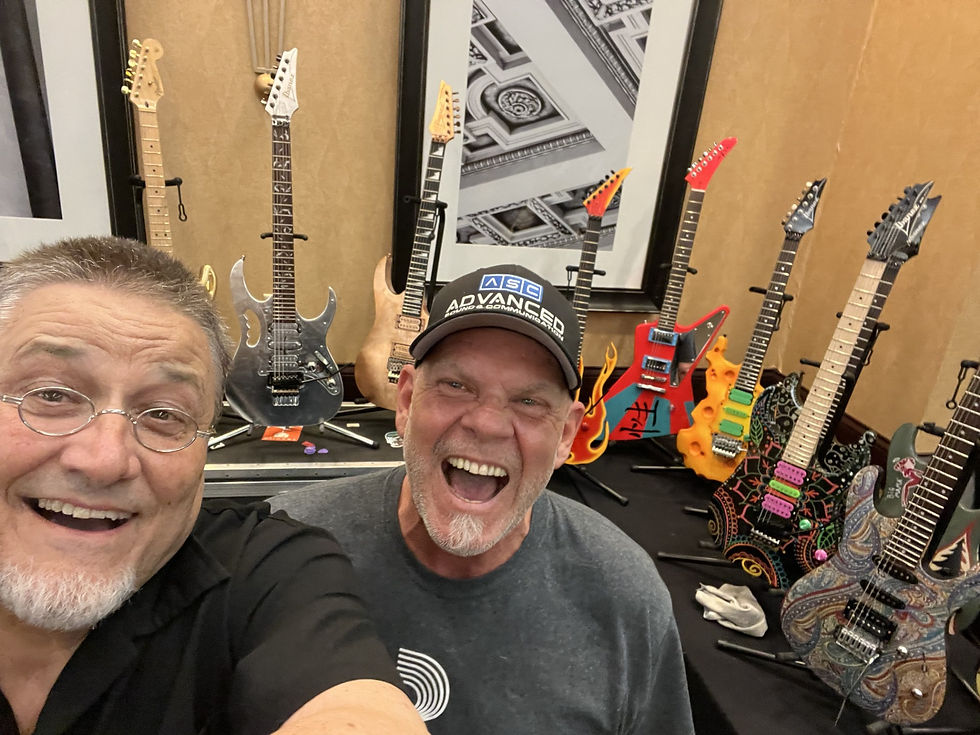
Go to a guitar show.


KC Guitar Show
KC Guitar Show


There is one in Kansas City this Sunday. March 16.


As an added bonus, “Every Guitar Has A Story” will be videotaping new episodes.


All Rights Reserved Every Guitar Has A Story 2026 - Mark Valentine 816-520-8430

bottom of page